
A Similan snorkelling day usually combines time in the water with island landings. These are different parts of the excursion: at a reef stop you enter from the boat; at a beach stop you may swim, eat lunch or walk ashore. Choose a programme that gives you enough time for the part you most want to do.
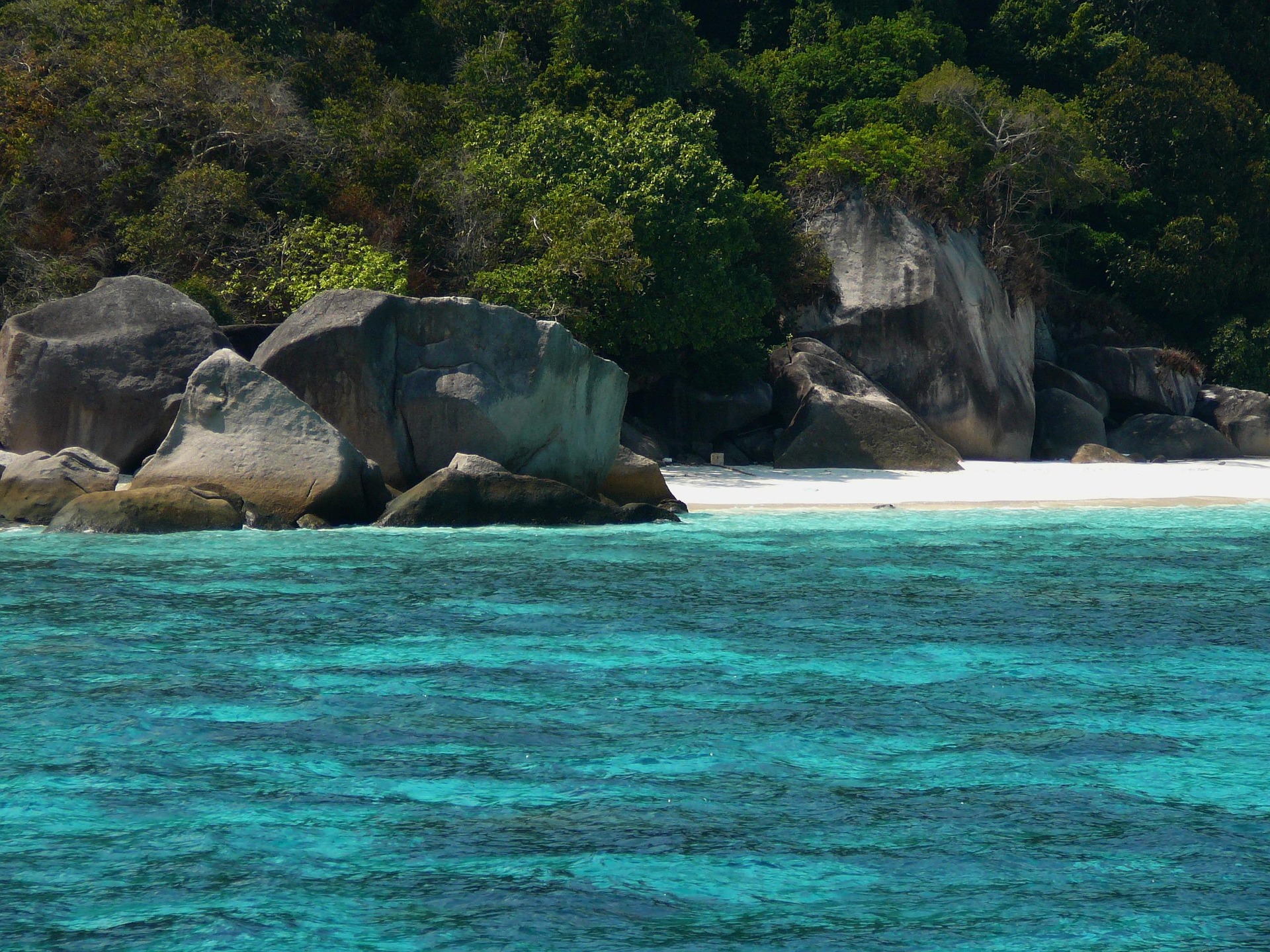
Similan Islands snorkelling trips
Where the boat stops matters
Published programmes include reef stops around Islands 5 and 6 or near Koh Bangu, with landings on Koh Miang and Koh Similan. They are examples of routes, not a fixed circuit every boat must follow. Khao Lak Explorer describes two to three snorkelling stops and a beach visit to Island 4 or 8; other programmes divide the day differently.
Read the itinerary for time in the water, not just the total number of named places. An island mentioned as a lunch stop may add no guided snorkelling time. Conditions can also change which side of a reef is used. The island map is useful for recognising the names without treating them as guaranteed stops.

First time with a mask?
Tell the operator before booking if you have never snorkelled in open water or are not a confident swimmer. Ask how the session is supervised, how passengers get back aboard and what flotation equipment is available. A life jacket does not make every sea condition suitable for every visitor.
Try the mask fit before the boat reaches the first reef. Ask the guide to explain the entry, return signal and the boundary of the swimming area. If the conditions or equipment do not feel manageable, stay aboard and discuss the next stop with the crew.
What to put in the day bag
Bring swimwear, a dry change of clothes, a hat and a waterproof way to carry valuables. Confirm whether the provider supplies a towel and equipment in the right sizes, especially for children or anyone needing a prescription mask. Carry the identity document or copy specified for your booking.
Use clothing for sun protection where practical and check sunscreen ingredients. Thailand’s national-park restrictions cover oxybenzone, octinoxate, 4-MBC and butylparaben. A “reef safe” label alone is not an ingredients check.
In the water, keep fins clear of coral and do not stand on the reef to adjust a mask. Leave animals space, avoid chasing turtles and do not feed fish. Good photographs do not require contact with wildlife.
The day starts before the pier
Work out the full journey before choosing a departure. The Phuket guide explains why a tour can start with an early road transfer. From a Khao Lak hotel, confirm the exact pickup area and meeting point. Both routes still depend on the park season and sea conditions.
If your group mixes divers and snorkellers, check that one boat genuinely provides for both. A dive liveaboard accepting non-divers is not necessarily a guided snorkelling holiday. Offshore pinnacles chosen for scuba diving may offer little for someone staying at the surface.
Snorkelling questions
Do I need a diving qualification?
No scuba qualification is needed for a snorkelling trip. You still need to discuss swimming confidence and follow the provider’s participation requirements.
Can children join?
Check the operator’s age rules and the specific boat. Ask about supervision, the length of the crossing, access back aboard and correctly sized life jackets; a child fare is not a suitability assessment.
Are masks and fins always included?
Many advertised packages include equipment, but check the list for your booking. Sizes, prescription masks and replacement arrangements should be confirmed rather than assumed.
Will I see turtles, manta rays or whale sharks?
No wildlife sighting is guaranteed. Choose the trip for the reef experience and leave room to enjoy what is actually there.
Is snorkelling the same as a beginner scuba dive?
No. Scuba uses breathing equipment underwater and requires a different briefing, supervision and eligibility process. See the diving page before booking a scuba product.